Wednesday, 28 March 2012

Potato-Corn Chowder


From Fields of Greens, Annie Somerville, Bantam Books, 1993.

Recipes that come from the Greens restaurant have always been ones that have pleased. The restaurant stays as one of the top memories from a visit to San Francisco. So it was somewhat of a surprise to find that this particular recipe didn’t come up with the goods. It was all right but bland and with the amount of cooking involved should have been better.

To start a corn stock had to be made. The instructions suggested that a corn soup required a corn stock otherwise the soup would not maintain its colour. So corn was shucked from 4 cobs and saved for the soup while the cobs were broken into several pieces and tossed into a pot of water with some vegetables and seasonings and simmered for an hour. This was then strained and the stock was ready.

For the next stage half of the corn had to be placed into a pot with a couple of cups of the stock. Half of the total amount of potatoes were also placed into the pot with salt and pepper. This was cooked until the potatoes were soft. It was then pureed and placed through a sieve. This puree then went into the pot with the remainder of the stock. A bay leaf was added and the mixture was cooked gently for a little longer. The puree thickened the soup and meant that cream was not needed, as is usually the case.

The next stage was to fry chopped onion, dried basil and thyme in butter and olive oil with salt and pepper. When the onions had softened the remaining vegetables were added: garlic, celery, diced potatoes and the remaining corn. These were sautéed until tender. White wine was added and the cooking continued until almost dry. 

The contents of the frying pan were now added to the soup to simmer for another 20 minutes. Chopped basil was added and it was ready.

It was disappointing to have so much work turn out to be such a pale version of a corn chowder. There was nothing wrong with it but a lack of real flavour.

Taste: ✔✔
Ease of cooking: ✔✔

Quick Soda Bread


From Vegetarian, Alice Hart, Murdoch Books, 2011.

I always like to have bread when I am eating soup. It’s not always convenient to go through the whole yeast process however so I was pleased to find this soda bread. It looked as though it might be quick and easy to make—and it was.


All that had to be done was to turn on the oven to heat to 180. Then while the oven was heating the mixture had to be put together. Two flours, plain and wholemeal in equal quantities, were sifted with baking soda. Some salt was added and some sugar. Then a small amount of butter was rubbed in. Water was added to make a rather sticky dough which was then formed into a loaf shape on baking paper. Into the oven it went until cooked.


This turned out to be a really good accompaniment to go with soup. It had quite a bit of flavour from the wholemeal flour and there was enough body to make it well suited for dunking.

Taste: ✔✔✔
Ease of cooking: ✔✔✔✔

Tuesday, 27 March 2012

Pasta with Mushrooms, Peas and Sun-Dried Tomatoes


From Elisa Celli’s Italian Light Cooking, Elisa Celli, Prentice Hall Press, 1987.

I’m glad I picked this older book again from my bookshelf. I’m enjoying getting back into the solid recipes.


This particular pasta did have prosciutto in it but I decided just to leave it out as the ingredients sounded as though they would work equally well without the meat.

It was a quick meal to prepare. First dried porcini mushrooms had to be soaked. While they were doing their bit, the remainder of the ingredients were got ready. An onion was chopped. A cup of frozen peas was taken from the freezer to defrost. A half-cup of sun-dried tomatoes (the kind marinated in oil) were chopped. Three garlic cloves were crushed. A little Italian herb seasoning was added to the sun-dried tomatoes.


By the time all this was ready the mushrooms had had sufficient time so they were sliced.

A pot of salted water was put on to boil . When it was ready the pasta was added to cook. At the same time the sauce ingredients were added to a frying pan with some olive oil and sautéed to be ready when the pasta was.

When it was cooked the pasta was drained and added to the sauce in the frying pan with a little of the cooking liquid.

It was all blended and put into the serving plates with some Parmesan cheese sprinkled on top.

A satisfying and easy pasta dish. I particularly liked the flavour bites from the tomatoes and the texture that the peas added.

Taste: ✔✔✔
Ease of cooking: ✔✔✔✔

As some of these books may be out of print if anyone would like a particular recipe, email me (alfcooksvege@ozemail.com.au) and I’ll send an abbreviated version. Of course, the whole book would be better; it’s loaded with other goodies.

Monday, 26 March 2012

Simple Roasted Tomato Salsa (Salsa Roja de Molcajete)/Super-Simple Enchiladas


From Truly Mexican, Roberto Santibañez, John Wiley & Sons, 2011.

The last salsa, a fresh one, I made from this book had an amazing punch to it so I was keen to see what a cooked salsa would be like. I chose a simple one to match the simple fresh one.

It was all very easy to do. The tomatoes and the chillies were roasted under the grill until blackened and cooked through. The chillies came out a lot earlier than the tomatoes.

The chillies were peeled and added with garlic and salt to a mortar and pestle and pounded into a paste. The tomatoes were skinned and added to the paste and pounded to become a rough puree. It was tasted and seasonings added.

I did not find this salsa had quite the bite that the raw one had, though it was still pretty good.

Taste: ✔✔✔
Ease of cooking: ✔✔✔✔


I had a sauce made so I needed something to use it with. I decided on super-simple enchiladas.

Some tortillas were warmed up one by one in the frying pan. Then they were, one by one, dipped into the warm sauce until fully covered. They were folded in half while they were still in the sauce. Again they were folded and then put in the oven to keep warm while the others were done.


It was then simply a matter of placing the enchiladas on the plate for serving with some chopped onion, some sliced avocado, some grated cheese and some sliced greens. Tasty and easy.

Taste: ✔✔✔
Ease of cooking: ✔✔✔✔✔


Green Bean and Kipfler Potato Salad with Miso Dressing


From The Conscious Cook, Tal Ronnen, William Morris, 2009.

When I saw the list of ingredients for this salad dressing I just had to make it to see what it was like: miso paste, rice vinegar, agave nectar, shallot, garlic, Dijon mustard, olive oil and lemon. That’s quite a mix for a dressing.


The salad itself was quite simple. Kipfler potatoes were boiled and then sliced. Green beans were blanched in boiling water. Roquette was washed. The three were mixed and tossed with the dressing.

The dressing had a wonderful tang to it with the lemon coming through just nicely over the bite of the mustard and miso. It suited the potatoes perfectly. And the sweetness of the beans complemented the mix well. This could easily become my favourite dressing for potato salads.


This is only the second item I have cooked from this book by Tal Ronnen. It’s a vegan cookbook and I have a tendency to overlook vegan because I have a strong preference for dairy products. But I am finding that this book is well worth investigating further.

Taste: ✔✔✔✔
Ease of cooking: ✔✔✔✔

Wednesday, 14 March 2012

Melon Salad


From Gourmet Cooking without Meat, Paul Southey, Marshall Cavendish Editions, 1980.

I don’t often delve into this old cookery book. It was one of the first really good vegetarian recipe books which I purchased. I used it often at the time but fashions change and so it seemed to get overlooked more and more. However I do think it’s worthwhile going back to look again at the past—forget fashion. Everything reappears at some time refashioned.


The melon salad sounded a bit odd to me at first but proved to be a pleasant enough fresh tasting salad.

It was simply made by cutting up honeydew melon into dice. A carrot was grated. Tomatoes were chopped, Some Edam cheese was cut into blocks. And a small amount of preserved ginger was cut up finely. These were all put into the bowl and tossed with the dressing which was made of lemon juice, olive oil, chopped parsley and mint, seasonings and a pinch of cayenne.


A pleasing return to past food fashion.

Taste: ✔✔✔
Ease of cooking: ✔✔✔✔✔

As some of these books may be out of print if anyone would like a particular recipe, email me (alfcooksvege@ozemail.com.au) and I’ll send a copy. Of course, the whole book would be better; it’s loaded with other goodies.

Tuesday, 13 March 2012

Delizia al Limone


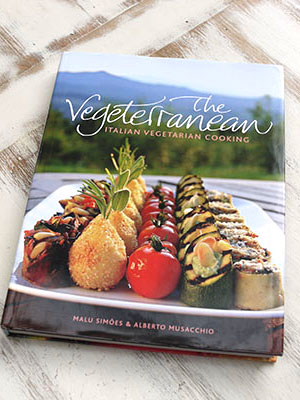
From The Vegeterranean: Italian Vegetarian Cooking, Maliu Simões & Alberto Musacchio, Simon & Schuster, 2008.

I remember the first time I tried limoncello. We were in Rome and it was uncomfortably hot. We had just finished eating at a little street restaurant close by our hotel and the waitress appeared at our table with glasses of limoncello for each of us. It was a wonderful surprise, totally unexpected. 

Every time I drink limoncello now I always remember that moment. A simple one but memorable.


When I saw these cakes in the book I was leafing through I got a sudden flashback to Rome and decided at that moment that I would make them.


There were several elements in the making. The first was to makes the cakes themselves. They were a very light sponge mixture. Egg yolks were beaten with sugar and vanilla until they became a pale yellow. The egg whites were beaten separately until stiff and then folded into the yolk mixture. Flour and baking powder was then sifted over the mixture and stirred in gently with some lemon zest. This was then placed into ramekin moulds which had been buttered and floured. They were then baked in the oven.

A custard mix was made next. This needed milk warmed with lemon rind and vanilla. Egg yolks and sugar were beaten in a separate pan until pale yellow. A little flour was added and mixed in. When the milk boiled it was poured immediately into the yolk mix while whisking continuously. This was then cooked over a double boiler until it had thickened. It was then cooled and some lemon juice added before it went into the refrigerator.

A sauce was then made. This was simply a sugar and water mix boiled and then cooled. When it had cooled limoncello was added.

The cakes were now able to be put together. The sponges were removed from the ramekins. A small circle was cut into the bottoms of each one. This small lid was set aside and the custard mix was piped into the cakes. The little lids were placed back on. The cakes were placed cut side up and the sauce was carefully poured over them. They were then refrigerated.


There was custard left over. Some cream was beaten with icing sugar until it formed soft peaks. Most of this was folded into the custard and limoncello added and mixed in. The cakes were now place on serving dishes, this time with the cut side down. The cream mix was spooned onto them. It was a consistency that let it run down the cakes and spread a little around the bottom. A dollop of cream was placed on top and some sugared lemon strips.

These were a lot of work but were worth the effort. They were scrumptious. The light-as-air cakes with their custard fillings were sweetly juicy with limoncello sauce and the lemon-flavoured creamy custard icing encasing them.

Taste: ✔✔✔✔✔ 
Ease of cooking: ✔✔