Showing posts with label Simon and Schuster. Show all posts

Tuesday, 28 May 2013

Pasta e Fagioli


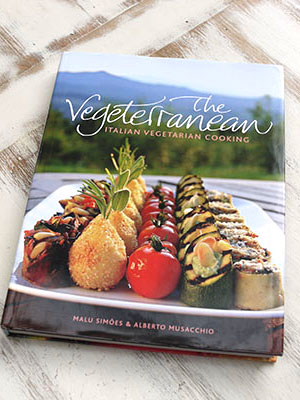
From The Vegeterranean Italian Vegetarian Cooking, Malu Simões & Alberto Musacchio, Simon & Schuster, 2008.
To make the sauce for this pasta I soaked 100g dried Borlotti beans overnight. The next day they went into a saucepan with a little over 400ml water, 3 basil leaves, a sprig of parsley, 2 peeled garlic cloves, ¼ onion, a celery stick cut into half, and ¼ green capsicum. A little olive oil was added with some salt and the mixture was brought to the boil then turned down to a simmer and cooked until the beans were done—about 1½ hours. The vegetables were now all removed, leaving the beans in the liquid.

The tomato sauce was now made. I peeled two tomatoes, cut them into half and removed the seeds. They were now chopped roughly and added to another saucepan. Into this also went ¼ green capsicum chopped, ½ celery stick chopped and ¼ onion chopped. This was simmered for about 20 minutes until it had thickened a little. Salt was added to taste and the tomato sauce was added to the bean mixture.

The pasta was made from a flour and water mixture. I took 220g 00 flour, added a teaspoon olive oil, a pinch of salt and about a tablespoon finely chopped herbs: rosemary, thyme and sage. I now added about 100ml water bit by bit until the mixture had combined into a ball. It was kneaded for about 10 minutes, wrapped in cling film and rested for 15 minutes. Now it was rolled in a pasta machine until it was nice and thin—down to setting 4. It was cut into strips ready to cook.
A large saucepan of salted water was brought to the boil and the pasta dropped in. The sauce was also stirred and reheated ready for use. The pasta only took a couple of minutes before it rose to the surface of the water and was scooped out with a slotted spoon. It was added to the sauce, combined gently and served.
I enjoyed the bean sauce though would in future chop the vegetables that went into the first bean mixture and leave them in. Just using them to flavour the beans and then removing them seemed a little wasteful. The pasta was very lightly herb flavoured, though not too strongly. This was a pasta of only flour and water, and I think I do prefer an egg pasta.
Taste: ✔✔✔
Ease of cooking: ✔✔

Friday, 14 December 2012

Crespelle Farcite con Frutta e Miele (Pancakes with Fruit and Honey)


From The Vegeterranean, Malu Simões and Alberto Musacchio, Simon & Schuster, 2008.

I set out with high hopes for this recipe but it turned out to be a complete failure for me. I measured the ingredients with care, gave them a waiting time, and then tried to fry the pancakes. They just would not work. They stuck, they didn’t spread, they either burnt or didn’t cook through, they were impossible to turn. What a waste of some cognac.

I checked and rechecked the recipe. I can’t see that I did anything wrong but it certainly didn’t work for me. I won’t try it again.

Saturday, 28 April 2012

Carrot Purée


From The Vegeterranean: Italian Vegetarian Cooking, Malu Simões & Alberto Musacchio, Simon & Schuster, 2008.

I decided to make this carrot purée to go with an aubergine tart I was making from the same book.

It was a simple accompaniment to make. The carrots were steamed until soft, then sautéed in butter with some chopped shallot. It was then seasoned with salt and pepper. This mix was puréed and left to cool. When it was cooled some grated Parmesan, some chopped parsley and chives were mixed in.

Taste: ✔✔✔
Ease of cooking: ✔✔✔✔

Friday, 27 April 2012

Aubergine Tart (Pasticcio di Melanzane)


From The Vegeterranean: Italian Vegetarian Cooking, Malu Simões & Alberto Musacchio, Simon & Schuster, 2008.

I use eggplant (aubergine) often. While it is not overly flavoursome itself, it absorbs the flavours around it and seems to be a versatile vegetable, being able to be used in a great variety of ways.

This looked like a very interesting recipe. It was for a tart but a tart without a pastry base. I was intrigued to see if the tart would be capable of holding itself together for eggplant is very soft when cooked. But I have always had success with recipes from this cookbook so I would have to trust it.


The eggplant (two of them), after being peeled and cubed, was soaked in cold water for 10 minutes, then drained and squeezed to remove as much moisture as possible. It was then cooked in a pot with a smidgeon of oil until it was softened and rather dry.

When the eggplant was cool a couple of eggs were beaten and added. Also going in were 200g of tasty cheddar cheese cut into cubes, some grated Parmesan, chopped garlic and oregano. It was then seasoned and placed into a greased spring-form pan to cook for about half an hour.


It was served with a sauce made from some capers and parsley, chopped, and whisked with some extra virgin olive oil. We had it with a carrot puree and some broccolini, which all went well with it.

The tart was a soft one and a little difficult to lift and place on plates as it had no tart case. However, it had a pleasing savoury taste with the occasional piece of cheese cropping up. The tangy sauce managed to bring into prominence the more subtle flavours of the tart.  Should I make it again, I think I might place it in a pastry shell.

Taste: ✔✔✔
Ease of cooking: ✔✔✔

Tuesday, 13 March 2012

Delizia al Limone


From The Vegeterranean: Italian Vegetarian Cooking, Maliu Simões & Alberto Musacchio, Simon & Schuster, 2008.

I remember the first time I tried limoncello. We were in Rome and it was uncomfortably hot. We had just finished eating at a little street restaurant close by our hotel and the waitress appeared at our table with glasses of limoncello for each of us. It was a wonderful surprise, totally unexpected. 

Every time I drink limoncello now I always remember that moment. A simple one but memorable.


When I saw these cakes in the book I was leafing through I got a sudden flashback to Rome and decided at that moment that I would make them.


There were several elements in the making. The first was to makes the cakes themselves. They were a very light sponge mixture. Egg yolks were beaten with sugar and vanilla until they became a pale yellow. The egg whites were beaten separately until stiff and then folded into the yolk mixture. Flour and baking powder was then sifted over the mixture and stirred in gently with some lemon zest. This was then placed into ramekin moulds which had been buttered and floured. They were then baked in the oven.

A custard mix was made next. This needed milk warmed with lemon rind and vanilla. Egg yolks and sugar were beaten in a separate pan until pale yellow. A little flour was added and mixed in. When the milk boiled it was poured immediately into the yolk mix while whisking continuously. This was then cooked over a double boiler until it had thickened. It was then cooled and some lemon juice added before it went into the refrigerator.

A sauce was then made. This was simply a sugar and water mix boiled and then cooled. When it had cooled limoncello was added.

The cakes were now able to be put together. The sponges were removed from the ramekins. A small circle was cut into the bottoms of each one. This small lid was set aside and the custard mix was piped into the cakes. The little lids were placed back on. The cakes were placed cut side up and the sauce was carefully poured over them. They were then refrigerated.


There was custard left over. Some cream was beaten with icing sugar until it formed soft peaks. Most of this was folded into the custard and limoncello added and mixed in. The cakes were now place on serving dishes, this time with the cut side down. The cream mix was spooned onto them. It was a consistency that let it run down the cakes and spread a little around the bottom. A dollop of cream was placed on top and some sugared lemon strips.

These were a lot of work but were worth the effort. They were scrumptious. The light-as-air cakes with their custard fillings were sweetly juicy with limoncello sauce and the lemon-flavoured creamy custard icing encasing them.

Taste: ✔✔✔✔✔ 
Ease of cooking: ✔✔

Saturday, 28 January 2012

Zuppa Reale (Royal Soup)


From The Vegeterranean: Italian Vegetarian Cooking, Malu Simõs & Alberto Musacchio, Simon & Schuster, 2008.

I have a fondness for soups (as is probably obvious). This royal soup looked very interesting and while it had several elements to it, I thought it was worthwhile having a go at it.


The first step was to make the stock. Tomatoes, an onion, zucchinis, carrots, potatoes and celery were cut into reasonably sized pieces and placed into a pan of water and simmered for at least an hour. The mixture was then strained to obtain the stock.

The interesting content for the soup was made while the stock was simmering away. Some egg was beaten with a little semolina, some grated parmesan, and pepper and salt. This was fried in small portions in a pan so that it was able to spread to make a thin little fritter. When the fritters were all done they were cut up into 5 mm squares.


The greens for the soup were escarole but as I had some English spinach on hand I decided to use that. This was blanched in hot water, then drained and roughly chopped. Some olive oil was heated in a pan with garlic added and cooked until it was golden. At this stage the spinach was added and cooked a little longer.

The stock was reheated and the spinach and little fritters were added and simmered for a few minutes. Some cubed soft cheese was placed at the bottom of the serving bowls and the soup placed over it.


This was a different soup that was quite enjoyable. The fritter pieces were tasty savoury bites. The cheese melted into the clear, gently flavoured stock and aided its texture. The spinach added a bitter tang. All in all a pleasing mixture of textures and flavours.

 Taste: ✔✔✔✔
Ease of cooking: ✔✔

Wednesday, 14 December 2011

Tartine Degustazione


From The Vegeterranean: Italian vegetarian cooking, Malu Simões & Alberto Musacchio, Simon & Schuster, 2008.

Little salad tarts. Sounded interesting. So I gave them a go. The recipes from Vegeterranean are just a bit different from the usual fare and I have found that they generally turn out worthwhile.


Making the dough was pretty easy. It was a 1:2 mix, 100g butter to 200g flour. There’s always something satisfying about working with your hands to mix the ingredients.

The dough was then rolled out, fitted into the small pie cases and baked. They turned out quite satisfactorily.

There were two salad mixes: potato and beetroot.


The potato was boiled and then cut into small cubes. All the flavourings were then added: mayonnaise, green olives, red onions, gherkins, chives, parsley and yoghurt, with some salt and pepper and a dash of Tabasco. It made a pretty tasty mixture.

The beetroot went through much the same method. Added ingredients were yoghurt, lemon juice, parsley, goat’s chees with salt and pepper and a dash of Tabasco. This was my preferred mixture.


The fillings were then ladled into the cases and they were ready for eating.

These were tasty and different appetisers, though they did tend to be a bit on the heavy side for a starter as they were quite filling.

Taste: ✔✔✔
Ease of cooking: ✔✔✔

Thursday, 14 July 2011

Corn Cake


Torta di Mais          
from The Vegeterranean, Malu Simões & Alberto Musacchio, Simon & Schuster, 2008.

Encouraged by the success of my palmiers I jumped at this recipe for what, I suppose, translates as a corn cake. Then I read that it was often given to recent mothers to assist them to regain their strength. I was not sure that it was something that I really needed but the photograph looked as though it could be eminently edible. And, so far, recipes from this book had proved good ones.


There was a lot of beating. The first came with whisking ingredients in a saucepan over heat for something like 15 minutes. This had to be cooled so there was time to rest the beating arm. Then egg yolks had to be beaten into the mixture, and beaten well to incorporate air. Finally the egg whites needed to be beaten until stiff and then folded in. From then on it was cooking in the oven.


The result was a very pleasant aniseed flavoured slice. Because of the cornmeal it had a slightly grainy texture that made for enjoyable chewing.


Worth trying—and worth repeating.

Taste: ✔✔✔✔
Ease of cooking: ✔✔✔