Showing posts with label Phaidon Press. Show all posts

Thursday, 2 January 2014

Ribollita


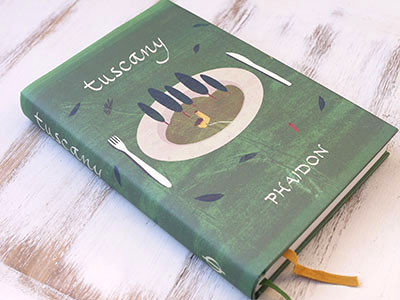
From Tuscany, Phaidon Press, 2010.
This recipe comes from the area around Siena in Italy. I remember the last time I visited Siena with part wonder and part anxiety for we had taken over long admiring the wonderful cathedral and only had a few minutes left to catch our tour bus or be left behind. In the hurry to reach the bus stop we took a wrong turn and became totally lost. Thank goodness for maps on the iPad. With the map and by running up endless steps we managed to arrive just in time.

I soaked 250g haricot beans overnight to be ready to go ahead making the ribollita. The next day they were drained and placed in a pot of water to cook for about 40 minutes.
While the beans were cooking I prepared the vegetables. I chopped ½ onion, a celery stick and 2 carrots. I diced a potato. I sliced 2 zucchini. These all went into a large saucepan in which 2 tablespoons of olive oil had been heated. They were now let cook for half an hour at a very low heat. They were stirred every so often.

I now sliced a couple of leaves of rainbow chard, a couple of leaves of cavolo nero and about ¼ of a Savoy cabbage. These went into the vegetable mix with a little salt.  They were stirred to mix everything, the lid went on and they were cooked for a couple more minutes.
The beans were drained and the liquid saved. Half of the beans were pressed through a sieve and the bean puree was stirred into the cooking vegetables. The saved liquid was also added. The vegetables were now simmered for another hour.


It was now time to add the remaining beans together with a good handful of chopped parsley. The mixture was simmered for another hour. Salt and freshly ground black pepper were added to taste and the soup/stew was ready to serve.
In the serving bowl I laid a slice of toasted sourdough bread. The soup was ladled over this, then another slice of toast and a further ladle of soup. Olive oil was dribbled over. It was let stand for a minute or two to let the bread soften and it was ready to eat.
There was a lot of cooking time involved in this but it was worth it for the flavours of the vegetables seem to intensify. Added to this you have the taste of the toast. It was richly satisfying, comforting food. And, the next day when it was finished off, it was even better.
Taste: ✔✔✔✔
Ease of cooking: ✔✔✔


Wednesday, 19 June 2013

Orecchiette with Mozzarella


From The Silver Spoon: Pasta, Phaidon, 2009.
I’m always ready to try a new pasta and I rather liked the idea of this one that was basically an all fresh sauce—only the pasta had to be cooked.

To begin I peeled and chopped three plum tomatoes and placed them in a large bowl. I sprinkled on a little salt and pepper. I then cut into cubes about 200g mozzarella. These were added to the bowl with a few basil leaves torn into halves. A little olive oil was dribbled over all of this.
Now the orecchiette were cooked in boiling salted water until done. They were then drained and quickly added to the bowl of ingredients. A quick stir so that the hot pasta would part melt the cheese, some capers were added and the dish was ready to eat.
I did enjoy this. The little ear shapes of the pasta managed to pick up cubes of mozzarella or pieces of tomato and the freshness was evident in the eating: wonderfully ripe tomatoes, the occasional salty tang of a caper and the chewiness of the part-melted mozzarella. A great meal starter.
Taste: ✔✔✔✔
Ease of cooking: ✔✔✔✔✔

Saturday, 16 March 2013

Gnudi (Spinach Gnocchi)


From Tuscany, Phaidon, 2011.
I’ve called this ‘Spinach Gnocchi’ despite its proper name, as it’s how I think of it.

I took two bunches of English spinach, cut off the stems and then placed the leaves in a saucepan with moderate heat until they had wilted. They were then cooled and squeezed to remove them of all the moisture. The leaves were finely chopped and placed into a bowl with some ricotta (a little more than half of a ¾ cup measure), about half a cup of grated Parmesan cheese, two tablespoons plain flour, a beaten egg, grated nutmeg and salt and pepper.

I then brought a large saucepan of salted water to the boil, formed the mixture into small balls and dropped them in. When they rose to the surface they were let cook a couple of minutes more before they were scooped out and served.
About 30g butter was melted in a small saucepan with 6 sage leaves. This was poured over the gnudi, some grated Parmesan sprinkled over and they were ready to eat.
I truly enjoyed these spinach gnocchi. They were richly flavoured and the sage butter sauce was perfect. This could become one for my permanent repertoire.
Taste: ✔✔✔✔
Ease of cooking: ✔✔✔✔

Monday, 24 September 2012

Bucatini with Mozzarella and Aubergine


From The Silver Spoon: Pasta, Phaidon, 2009.

I found some bucatini in the supermarket so thought I’d like to try it out.

An aubergine was cut into slices and then cross cut into julienne strips. It was placed in a colander and sprinkled with salt. After half an hour I rinsed it and dried it. It was then fried in a little olive oil until it had browned slightly. It was then left while I went ahead with the sauce.


 Four tomatoes were peeled and chopped. The recipe called for them to be seeded but the seeds never worry me so I just ignored this. I also left out the bacon that was included in the recipe. So the tomatoes went into a saucepan with a little olive oil, some chopped chilli and salt and pepper. It was brought to the boil and then turned to a simmer.

A pot full of salted water was put on to boil. When it was ready the bucatini was added and cooked until al dente. At this stage the aubergine went into the tomato sauce and was brought up to simmer again.

The bucatini was drained and added to plates. Chopped mozzarella cheese was stirred into the sauce and the sauce was spooned over the pasta. A chopped boiled egg was sprinkled over the top.

I enjoyed the bucatini. I rather like the hollow straws which take in more of the sauce than solid spaghetti does. The sauce was flavoursome, the aubergine by now having disintegrated into the tomato mixture. And there was the added joy of pieces of stringy mozzarella being met on some mouthfuls.

Taste: ✔✔✔
Ease of cooking: ✔✔✔✔

Thursday, 23 August 2012

Cecina


From Tuscany, Phaidon Press, 2011.

This was the easiest dish to make. It was simply a matter of mixing up one cup of water with ¾ cup of chickpea flour (besan). About a tablespoon of olive oil was added together with a liberal amount of pepper and salt.


This mixture was poured into a greased dish to cook in a hot over for about half an hour until it was cooked and had turned a bice brown colour. It was required to be no more than 1 cm thick in the dish and it turned out to be a flat chickpea cake that could be cut into slices and served between slices of bread. We had it is Lebanese bread.

Apparently this is a street food around the Livorno district in Italy. I rather liked it though my partner did not and ended up not finishing it. I ate the remainder of it myself the following couple of days. It worked well, for me, as a snack when the hungers got hold of me.

Taste: ✔✔✔
Ease of cooking: ✔✔✔✔✔

Wednesday, 11 April 2012

Tomato and Bread Soup (Pappa col Pomodoro)


From Tuscany, Phaidon, 2011.

Tomato soup is always a favourite so I thought this one from Tuscany would be a pleasant variation on the usual. It turned out to be a weak version of what I usually associate with tomato soup.


Firstly the tomatoes were skinned and the seeds were removed. They were then chopped and forced through a sieve. A pot of water was brought to the boil and garlic cloves, basil leaves, some olive oil and seasonings were added. I gave them a few minutes simmering and then added the tomatoes and continued simmering for another 15 minutes.


The garlic and basil were removed, leaving a thin watery soup. Some bread slices were placed in the serving bowl and the soup poured over. After it stood for a little while for the bread to absorb the soup a little olive oil was drizzled on. I then added some chopped olives because it looked a bit uninteresting. It still looked uninteresting.

This turned out to be thin in texture and thin in taste. It was a rather weak soup. The tomato flavour itself was clear and clean but overall needed to be stronger.

Taste: ✔✔
Ease of cooking: ✔✔✔

Tuesday, 24 January 2012

Cavolfiore in Umido (Stewed Cauliflower)


From Tuscany, Phaidon, 2011.

This sounds much better by its Italian name than that of Stewed Cauliflower.

Aiming to head for Tuscany later this year, it seemed a good idea to try some more vegetarian Italian cooking from that region. I turned to this rather handsome volume which is a mixture of recipes and information on the foodstuffs and farming of the different regions.


I was somewhat concerned about the time that the cauliflower was to be cooked in this recipe. Firstly, before anything else is done, it had to be boiled for half an hour. This was already some 20 minutes more than I would normally cook it.

The cauliflower was then cut into reasonably thin slices. It was so soft that it was falling apart a little, though it was manageable.

Garlic was then fried in a pan of olive oil until it had browned a little. This was taken out to leave a garlic-flavoured oil to which the cauliflower pieces were added and cooked on a low heat until slightly browned. Some tomato paste was dissolved in warm vegetable stock and added to the pan. Seasonings were added and the pan covered to simmer for an hour more.

I began to panic after half an hour. This seemed far too long to cook cauliflower. I knew it was called stewed cauliflower but I couldn’t bear to have it stew any longer.


It was a soft, mushy vegetable that was served on the plates and while I didn’t really appreciate its softness it was remarkably strongly flavoured. Rather than being washed out, the flavour seemed to have intensified. Served in a smaller quantity as an accompaniment with other items this could work well as a contrasting element of flavour.

Taste: ✔✔✔
Ease of cooking: ✔✔✔✔