Showing posts with label Damien Pignolet. Show all posts

Sunday, 28 July 2013

The Very Best Tomato & Mozzarella Salad by Steve Manfredi


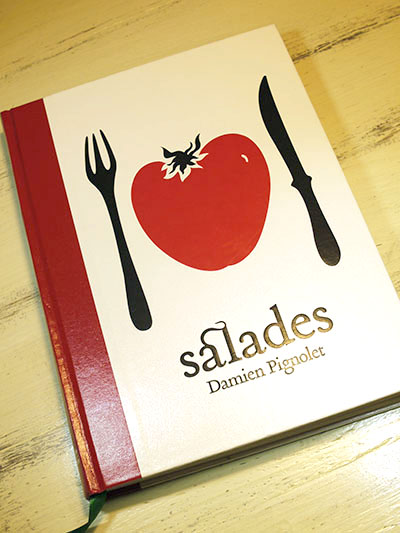
From Salades, Damien Pignolet, Lantern, 2010.
There was no way I could exactly duplicate this recipe as it is made with particular varieties of vegetables grown by the chef. However I thought it was worth a try just making it with what I could find at the shops.

I took one tomato per person and carefully cut out the core at the top of the tomato. I widened the opening a little and cut away some of the tomato inside. Now the hole was seasoned with salt and black pepper and filled with extra virgin olive oil. The tomatoes now went into a 180ºC oven for about 15 minutes. They were taken out and put aside until the remainder of the salad was prepared.

A simple pesto was made of basil leaves, pine nuts, a garlic clove, olive oil and Parmigiano Reggiano cheese.
A witlof was sliced finely and arranged on the serving plates. On top of this went a slice of buffalo mozzarella. The tomato sat on this and the top of it was filled with pesto. Additional pesto was dotted around the plate.
This made an attractive and tasty salad, lean but flavoursome.
Taste: ✔✔✔✔
Ease of cooking: ✔✔✔✔

Tuesday, 16 April 2013

Raw Cauliflower Salad with Watercress


From Salades, Damien Pignolet, Lantern, 2010.

Raw cauliflower is not exactly a favourite of mine. I do enjoy it cooked but I find that raw it is a bland, rather tedious vegetable to eat. Nevertheless, I thought I’d give it another try in this salad.


The cauliflower, sufficient for the two of us, was broken into florets and soaked for about 10 minutes in cold water. After this they went into a pot of boiling salted water. The recipe says for 30 seconds; I left it there for a minute to make sure and because of my edginess about it raw. It then went into cold water again to halt the cooking.

An apple was peeled, cored, thinly sliced and mixed with the juice of a half a lemon.


Two stalks of celery from the centre of the bunch were sliced. Two spring onions were sliced thinly. Two eggs were boiled until hard.

The cauliflower, apple, celery and spring onions were placed in a bowl with some chopped parsley.

A dressing was made with a teaspoon Dijon mustard, salt and pepper, cider vinegar, extra virgin olive oil and a little walnut oil. This was not the dressing from the recipe, which had a coddled egg beaten into it; I decided against the egg.

The dressing was poured over the vegetables that were then gently tossed. When served, watercress leaves and rocket leaves were added.  The boiled eggs were shelled, quartered and added on top. A little smoked paprika was sprinkled over.

The crunch in this salad was really evident—it was all crunch that had to be chewed and chewed.  The flavours were there, though somewhat delicate. I am still not totally convinced about cauliflower eaten raw.

Taste: ✔✔
Ease of cooking: ✔✔✔

Sunday, 2 September 2012

Brussels Sprout Leaf, Watercress and Celery Salad with Roquefort Dressing


From Salades, Damien Pignolet, Lantern, 2010.

The dressing for this salad was made by mixing some Roquefort with crème fraîche and lemon juice and whisking them until the dressing had achieved a balance that tasted right. Salt and pepper were added, again to taste. This dressing was very creamy.


For the salad I separated Brussels sprout leaves and gave them a quick blanch, though the recipe did not call for this. Some inner celery stalks were cut into thin strips and added together with some of the leaves. An apple was sliced thinly and given a quick toss in some lemon juice to prevent it colouring. Watercress leaves were added to the mix as well as a few other salad leaves though these were not called for.

The salad was then tossed with the creamy dressing and chopped roasted walnuts sprinkled over the surface.

Perhaps my dressing was a little too thick and should have been thinned with more lemon juice because the salad looked a bit on the white side. This did not, however, detract from its flavour because it went down well. The Roquefort was an especially good companion for the Brussels sprouts.

Taste: ✔✔✔
Ease of cooking: ✔✔✔✔

Saturday, 4 August 2012

Family dinner


The family were coming to dinner. This doesn’t happen often but it is always a pleasure when it does.

I needed to settle on a menu that would please all, be able to be got together without too much trouble and that suited the occasion with plenty to sample. I also decided to choose a menu from items on my blog site.

I decided to begin with a chickpea and leek soup (Jamie Oliver’s The Naked Chef) that is a favourite with us at home. In fact, of all the soups we eat, this one would be the one that we make most frequently. It’s easy to prepare, can be made a bit ahead of time and packs a heap of flavour to start people wanting more. With the soup we had an olive sourdough bread. Very tasty.


For mains I already had prepared the previous evening two individual casseroles of quick tomato macaroni cheese (Jamie’s Dinners). For the other dinner guests I prepared individual baked ricottas (Vegetarian, Alice Hart). I cooked these in the oven when the guests arrived while, at the same time, heating up the macaroni cheeses.


For vegetables I decided on broccolini with truffle butter, cherry tomatoes on the stem, green beans cooked in vodka (More from the Accidental Vegetarian, Simon Rimmer) and Pan Haggarty (The Accidental Vegetarian, Simon Rimmer). The green beans did not turn out extra special as I had anticipated that they would but the Pan Haggarty was particularly good—far better than the first time I had made it.


For the dessert course I thought I would make two so that guests could choose one or the other—and they all chose to have both. One was cold, a papaya, blood orange and strawberry salad (Salades, Damien Pignolet), and the other was hot, Mother’s Roly Poly (Mrs Harvey’s Sister-in-Law and other tasty dishes, Margaret Dunn). I guess you could consider the sweets a great success. There weren't even any photos taken as they all went down too quickly.


We had a great night. Everyone was in a really happy mood. The food all went down well. It always helps when there is choice (even if everyone takes both of the choices).


Wednesday, 13 June 2012

Salad of Goat’s Cheese Fritters with Beetroot and Figs


From Salades, Damien Pignolet, Lantern, 2010.

Beetroot, goat’s cheese and figs—sounded like a perfect mix so I settled on making this dish.

The beetroot were to be baked but I chose instead to boil them until they were tender. They were then peeled and cut into quarters because I was unable to procure baby beetroot. The beetroot were placed into the refrigerator until ready to be put into the salad.


The goat’s cheese was cut into sections and rolled in seasoned flour, dipped into beaten egg and then rolled in panko breadcrumbs. These were also placed in the refrigerator until time to fry them.

A vinaigrette was made with a chopped shallot and a clove of garlic, Dijon mustard, red wine vinegar, salt and pepper and extra virgin olive oil.

The goat’s cheese fritters were then fried until they were crisp.


A mix of rocket and frisée was tossed in the vinaigrette. The beetroot was also, though separately to prevent it colouring the green leaves.

The leaves were placed on the plate, the beetroot around them. The figs were cut into quarters and placed around, tucking them into the salad. The goat’s cheese fritters were placed into position in the salad.

What a delightful salad. Not only did it look great but it also tasted great. I loved the crunch on the outside of the fritters as you bit into them and hit the creamy salty interior. And they went so well with the sweet beetroot and figs.

Taste: ✔✔✔✔
Ease of cooking: ✔✔✔✔

Wednesday, 4 April 2012

Salad of Chickpeas, Cucumbers and Preserved Lemon


From Salades, Damien Pignolet, Lantern, 2010.

This simple little salad was no more than putting together the ingredients: a can of chickpeas, some chopped cucumbers, a chopped garlic clove, some basil torn into pieces and some chopped spring onions. The extra ingredient that lifted all of this into another level was the addition of the rind of some preserved lemon chopped finely. All was now carefully mixed together in a bowl and seasoned.


For the dressing—and it isn’t a salad unless it has a dressing of some sort—a little red wine vinegar and some virgin olive oil was added. It was then served in a lettuce leaf.

This was a salad that I’m sure will see the dinner table at home again as it was so easy to prepare and was such a fresh, pleasant salad to eat.

I am enjoying working my way through Salades for I am finding many surprises that are pleasing to both make and eat.


Taste: ✔✔✔✔
Ease of cooking: ✔✔✔✔

Sunday, 29 January 2012

Waldorf Salad


From Salades, Damien Pignolet, Lantern, 2010.

My Waldord salad didn’t exactly follow all the ingredients as per the instructions in Salades, but then, the recipe did mention that the recipe has altered so much over time that it is difficult to know exactly what the original recipe was like.


The variations I made were not including celeriac; there was none available. I also didn’t not peel my walnuts. While the instructions advised that the difference between a peeled and an unpeeled walnut is remarkable, I just wasn’t in the right mood to carry out this delicate operation.

So what I did was dice the inside stalks of celery. I chopped up the apple and tossed it in a little lemon juice. The mix of celery and apple was tossed in some mayonnaise (a commercial one). Walnuts were then chopped and combined with the other ingredients. And this was basically it. It was placed in some cos lettuce leaves and a few leaves of watercress were added.


When you cut out the walnut peeling process this is a quite simple salad to prepare. And, if you like lots of crunch, it’s a fresh flavoursome one. I don’t over like the texture of celery. The flavour is fine but biting into it is, for me, close to the fingernails-on-the-blackboard feeling. However, this is modified a little by the mayonnaise and doesn't screech quite so much.

Taste: ✔✔✔
Ease of cooking: ✔✔✔

Monday, 14 November 2011

Broad Bean, Baby Beetroot, Celeriac & White Onion Salad with Walnut Cream Vinaigrette


From Salades, Damien Pignolet, Lantern, 2010.

The last time I used this book it was for a fruit salad of papaya, blood orange and strawberries. This was a great success so I’m back now into the vegetable salads. There’s heaps to choose from in this elegant book.


For this particular salad there was a reasonable amount of pre-cooking before it could be put together. The beetroot had to be boiled (I used normal beetroot as I could not find babies). The broad beans had to be boiled and then skinned. A slow process but the resulting beans look wonderfully green. The onions had to be boiled. The walnuts had to be fried to gain a little colour.

The other ingredients were prepared without cooking first. The celeriac was cut into julienne. The dressing ingredients (walnut oil, crème fraiche, garlic and cider vinegar) were whipped into a creamy mixture.

The salad was put together in stages. The celeriac, beans and walnuts were dressed and put onto the plates. The onions were then dressed and put on the plate. Lastly came the beetroot so they did not colour the rest of the salad. They were dressed and placed into position and some frisée leaves added. The remaining dressing was poured over.


It was a bit on the fiddly side with all the elements having to be handled separately but it turned out to be a salad that was worth all the work. The creamy dressing worked well with the ingredients. There was a good element of crunch with the celeriac and walnuts. The sweetness of the beetroot was a nice contrast for the onions and broad beans.

Taste: ✔✔✔✔
Ease of cooking: ✔✔✔