Showing posts with label Denis Cotter. Show all posts

Thursday, 15 August 2013

Cashew Loaf with Pumpkin Stuffing and Chocolate-Chilli Gravy


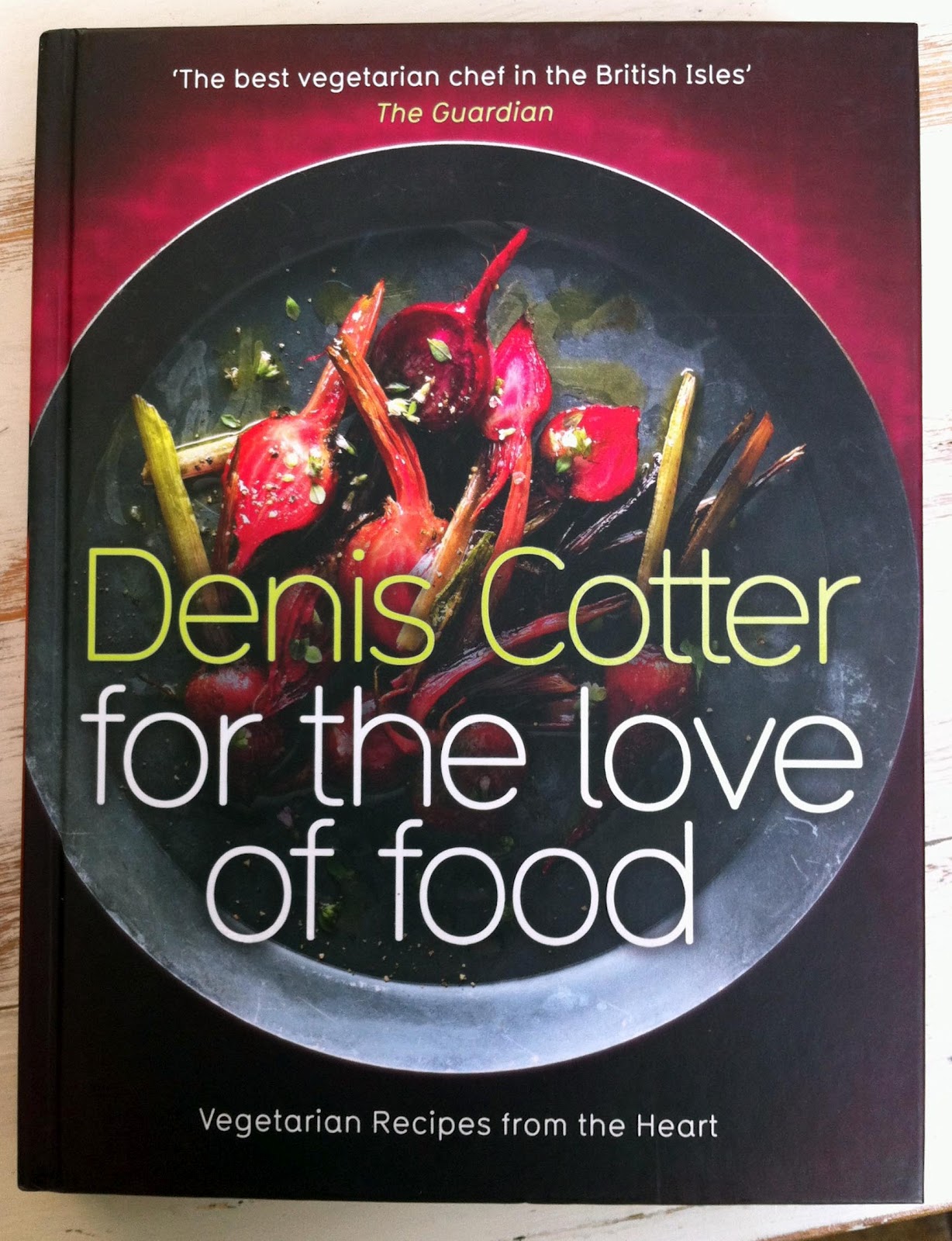
From For the Love of Food, Denis Cotter, Collins, 2011.
I guess nut loaves were fashionable in the 70s and became associated with vegetarians and soon got a bad name because they were often not overly tasty. So I hesitated before I made this one but I usually enjoy Denis Cotter’s recipes so thought it was worth a try.


There were basically three parts to it: the cashew nut base, the pumpkin filler and the sauce.
The base was made with 500g roasted cashews blitzed until fine. This was mixed with a cooked parsnip that had been mashed. Into this also went a white onion sautéed with 3 garlic cloves, two chopped celery sticks, a little ground sage, some fresh thyme leaves, a teaspoon ground cumin and a good pinch of cayenne pepper. When they had softened, 100ml white wine was added and brought to the boil. This all then went into the cashew mix. The mixture was stirred together and breadcrumbs added with salt and pepper. It became quite a firm but moist mixture. A beaten egg was added and stirred in. The basic mixture was ready.

The filling was made by roasting 200g butternut pumpkin. A chopped leek was fried until softened in a little olive oil. Now some grated ginger, zest and juice of half a lemon was added with the roasted pumpkin. These were stirred for a couple of minutes to make the pumpkin break up into a mash with the leek. Some breadcrumbs were added to thicken it all a little.
Now the loaf could be put together. In a loaf tin lined with baking paper half of the cashew mix was pressed in. The pumpkin mixture went over this and was then covered with the remainder of the cashew mix. It went into a 170ºC oven for about an hour.

The sauce was made by sautéing a chopped red onion, half a red capsicum, a chopped celery stick, 4 garlic cloves, a chopped red chilli and a chopped chipotle chilli. After about 10 minutes when they had softened, 1 teaspoon dried Mexican oregano, 2 teaspoons ground cumin and ground coriander, and 1 teaspoon ground allspice went into the pan for a minute or two more. A can of tomatoes and 1 tablespoon tomato puree were added with 200ml red wine and 500ml vegetable stock. They were simmered for about an hour then passed through a sieve. At serving time 25g dark chocolate and 40g butter were added. This made a richly flavoured, Mexican style mole, though far too much sauce for the loaf. I used some later to add some flavour to a leek and chickpea soup.
The loaf was sliced and served with the sauce. It was, of course, nutty and a little heavy though the sauce tended to lighten it somewhat. I especially enjoyed the sweet pumpkin filling. It was the sauce that made the loaf. It was rich in an overlay of various tastes, spicy, smoky, chilli heat though the chocolate seemed to have disappeared into it. Perhaps I would up the quantity a little next time.
Taste: ✔✔✔
Ease of cooking: ✔✔

Friday, 29 March 2013

Cavolo Nero with Red Capsicum, Olives and Smoked Cheese Polenta


From Wild Garlic, Gooseberries … and Me, Denis Cotter, Collins, 2010.

I am always concerned when cooking polenta that it should come out flavoursome and not like a tasteless porridge. This recipe gave an excellent polenta result.


In a saucepan I brought to the boil 500ml water with a stock cube and then whipped in 100g polenta slowly. This was stirred and stirred until it had thickened somewhat and begun to leave the edges of the saucepan. The heat was now turned down to low and the polenta continued to be cooked for another 20 minutes, stirring every so often.


Meanwhile I sliced cavolo nero leaves, discarding the hard stem. I cut a red capsicum into small pieces. I sliced three or four black olives. I chopped a garlic cube. I chopped a red chilli finely. The cavolo nero went into a frying pan with a little oil and was cooked for a few minutes. Then in went all of the other ingredients to cook for another few minutes. Now a little water was added to the pan and a lid placed on to let it simmer for about a quarter of an hour.

The polenta was now ready to about 20g butter was added with 30g grated smoked cheese and a tablespoon chopped sage. This was all stirred in. It did not seem to need any addition of salt but a few gratings of black pepper were added.

A helping of polenta was placed on a serving dish and the vegetables added alongside with the liquid. A little extra virgin olive oil was sprinkled on and it was ready to eat.

This was bursting with the flavour. The smoky polenta went wonderfully with the bitter greens and the sweet capsicum. The juices had flavoured up and went well with the polenta. 

Taste: ✔✔✔✔
Ease of cooking: ✔✔✔✔

Friday, 8 February 2013

Pappardelle with Brussels Sprouts, Leeks and Truffle Cream


From For the Love of Food, Denis Cotter, Collins, 2011.

I still had leeks to use up and a quick search located the interesting mix of ingredients for this pasta dish.

A leek was cut in half and sliced thinly. About 200g of Brussels sprouts were sliced thinly. A couple of garlic cloves were sliced. They all went into a frying pan with a knob of butter to sauté.


Meanwhile a large saucepan of salted water was put on to bring to the boil.

The vegetables became nicely softened after about 5–10 minutes and 100ml white wine was added to cook for a couple of minutes.


The water was now boiling so the pappardelle was added.

About 200ml of cream now went into the frying pan and was brought to the boil at which stage some grated Parmesan cheese, some freshly grated nutmeg, a little truffle oil and salt and pepper were stirred in.

The pappardelle was ready. It was drained and some placed into individual serving plates. The vegetable mix with the sauce was added on top.

The sauce was creamy and savoury while the vegetables still had a little bit of bite left to them. While I am a fan of Brussels sprouts I’m not that sure that I fully enjoyed them in this form as much as I usually do. The meal was appreciated but it’s not one that I would race back to make.

Taste: ✔✔✔
Ease of cooking: ✔✔✔✔

Tuesday, 11 December 2012

Potato, Garlic Chives, Feta and Pine Nut Tart


From Wild Garlic, Gooseberries . . . and Me, Denis Cotter, Collins, 2007.

This recipe calls for wild garlic rather than garlic chives. Cotter, in this book, tells about the wild foods he likes and discusses the problem of wild garlic in that there are many items throughout Europe, North America and Africa that are called wild garlic. He settles for a couple that he knows in Britain. I wondered about the wild garlic and considered that garlic chives here in Australia may perhaps be one of the wild garlics and so decided to try his recipe but using garlic chives.

Firstly I had to make the pastry for the tart case. This was a simple flour and butter mix with a touch of cold water. While it was serving its half hour in the refrigerator I got onto dealing with the vegetables.


I got out the mandolin and sliced 500g potatoes. They went into salted boiling water for about 3 minutes, then a cold bath to cool them. They were then dried.

The garlic chives (about 150g) went into salted boiling water for 30 seconds. They were then cold bathed and squeezed to rid them of any surplus water. The chives were chopped roughly. They were mixed with 200g crumbled feta and 2 tablespoons pine nuts that had been lightly roasted.


The pastry case was part cooked until it was lightly brown. A layer of the chives mix now went in and was covered by a layer of potatoes. This was repeated twice more. Four eggs were beaten with 150ml cream and carefully poured into the tart, letting it seep through the potatoes. It looked as though it would not all fit but adding it slowly and giving it time to disperse though the filling it all did go in.

It was baked in a 180ºC oven for half an hour.


The result was a reasonably tasty potato pie. The garlic chives did not seem to be noticeable more than possibly an added savouriness. The grassiness of the raw chives had dissipated in the cooking. I’m not sure that there was any real benefit from using the chives and if I make this again I would substitute another ingredient, possibly spinach or just cooked onions.

Taste: ✔✔✔
Ease of cooking: ✔✔✔

Tuesday, 18 September 2012

Potato Crêpes of Asparagus and Brie with Warm Beetroot and Puy Lentil Salsa


From For the Love of Food, Denis Cotter, Collins, 2010.

I always approach a new Denis Cotter recipe with a lot of anticipation. They sound so good. However, I don’t always find that they match my expectation. That’s the case with this recipe. Some, such as a cauliflower risotto or Lucy’s breakfast sausages, turned out wonderfully but others have been a little disappointing. This could, of course, be the result of my cooking.

The crêpe mixture for this one was the usual with the addition of mashed potato, sour cream, cayenne pepper and chives. This was left in the fridge while other elements were prepared.

Asparagus was boiled for a few minutes until it was tender, about 3 minutes. It was then drained and cooled.


I dispensed with the idea of the tarragon butter as fresh tarragon was unavailable. A little melted butter would I hope do the trick.

Puy lentils were put on to cook with a little thyme and garlic. The amount of water called for was just not sufficient to cook the lentils in and extra had to added several times. When they were done, there was no need to drain the lentils as there was no water left. A diced cooked beetroot was added with sliced spring onions, some maple syrup and a little balsamic vinegar.


While the lentils were cooking the crêpes were made. Each crêpe had Brie pieces placed across the centre, asparagus was laid across this, and the crêpe was rolled up. Some melted butter was dribbled over these and they went in the oven to warm them through and melt the Brie.

They were then ready to serve with the lentil salad.

While this turned out to be a reasonable dish it was no real winner for me. I did enjoy the potato crêpes though. There were some left over and I had them the next day adding a variety of whatever I could find from the fridge and thoroughly enjoyed them.

Taste: ✔✔✔
Ease of cooking: ✔✔✔

Thursday, 16 August 2012

Broccolini and Oyster Mushrooms in Ginger Broth with Pumpkin and Macadamia Dumplings


From Wild Garlic, Gooseberries . . . and me, Denis Cotter, Collins, 2007.

Reading Denis Cotter’s writing about vegetables can only inspire one to get going into making his dishes. This book is, for the most part, made up of musings, discussions and information about vegetables and Cotter’s love of them as growing plants and as subjects for eating. And so that his enthusiasm can get his readers to try the vegetables he has included four sections between the reading material of recipes, all of which sound, just from their titles, enough to get the salivary juices going.

For this first attempt of mine, I got the ginger broth going first. Into a pot of boiling water went cut up vegetables of various types: celery, carrot, onion, garlic, chilli and the main flavouring, fresh ginger. These simmered for about 20 minutes.

On top of the simmering pot I placed a steamer and cooked the pumpkin for the dumplings. When it was done it was mixed with some chopped macadamias, lemon zest and chopped coriander. Though it was not mentioned in the recipe, I seasoned this mix.


By now the broth had finished its time so it was turned off and soya sauce added. I tasted the broth and it had quite a heat to it and was strongly gingery. I was unsure at this stage, feeling that the ginger may be a bit too strong and overpower the rest of the dish.

Small quantities of the pumpkin mixture, when cool, were placed into the middle of wonton wrappers. It was shaped roughly rectangular and the wrapper folded over to wrap up the mixture. All was now ready for the final stage.


Broccolini and oyster mushrooms were now stir-fried for a few minutes and the broth put on to a simmer. When the vegetables were close to ready, the broth was brought to the boil and the dumplings dropped in for a couple of minutes to cook. At the same time some sliced spring onions were added to the vegetables.

The dumplings were taken from the stock and placed into serving plates. The vegetables were placed alongside and the broth poured over.

My concern over the strength of the ginger broth went when I tried the dish. It had somewhat diminished when eaten with the dumplings, though it was still a little strong. I had cut back the amount of ginger in the broth by about a third when I made it so feel it would have been far too strong if the full amount had been used. Despite my concern over the ginger the dish was a pleasant one. The elements all cohered to make a dish that was light and satisfying.

Taste: ✔✔✔
Ease of cooking: ✔✔✔

Sunday, 22 July 2012

Leek and Wasabi Mash with Oyster Mushrooms and Choi in Coconut Tamarind Sauce


From For the Love of Food, Denis Cotter, Collins, 2011.

One of the selling points for me in this book was that it had a whole section of recipes for mash. And these mashes were all of somewhat exotic sounding names, like this particular one for leek and wasabi mash and accompaniments. I could not resist a book which had such a variety of mash dishes.

To begin the leek was chopped and sautéed in butter until tender. One teaspoon of wasabi powder was mixed to a paste in a little milk. The potatoes were steamed and mashed with warmed milk and melted butter. Then in went the leeks and the wasabi paste. That was the mash done.

For the accompaniment part of the recipe some tamarind pulp was soaked in a little boiling water. It was left to soak and then pushed through a strainer to separate the pulp from the liquid. The tamarind water was kept and the pulp binned.


Oyster mushrooms were now fried in butter for a couple of minutes. In went some bok choi cut into quarters and a very small amount of grated ginger. These were fried until the bok choi were tender. To finish, the tamarind water was added with coconut milk and a little soy sauce.

It was served in pasta bowls with the vegetable mixture alongside the mash.


I found that this did not come together totally as a whole dish. The flavours did not meld well for my palate. It would seem from the short introduction to the dish that Cotter was trying to make a mix work. I don’t feel that it was completely successful. Using an Asian noodle dish and then substituting mash for the noodles did not really work despite Cotter’s efforts to make the mash and sweetness of the coconut milk meld by the addition of the sourness of tamarind. It was quite edible but not something that I would make again. Better luck with the next mash dish I try.

Taste: ✔✔✔
Ease of cooking: ✔✔✔

Tuesday, 22 May 2012

Roast Pumpkin Soup with Chickpeas, Leeks and Spiced Croutons


From For the Love of Food, Denis Cotter, Collins, 2011.

My son brought along one of the pumpkins he had grown so I immediately set off looking for recipes. Pumpkin and chickpeas are always a great partnership so I set off to make this soup.

The pumpkin first had to be roasted. It was cut into a couple of large slices that were then brushed with olive oil and set in a baking dish. About a cup of stock was poured into the baking dish and the pumpkin was cooked for about a half an hour.

In a large saucepan the other vegetables were cooked. One half of a fennel, chopped, was sautéed with some chopped shallots for a few minutes. Chopped garlic was then added with grated ginger (I only used half the quantity because I usually find ginger is overdone), leeks (I only used 2 though the recipe called for 3 and even then it seemed far too much) and a can of chickpeas. These were sautéed for a few minutes before white wine was added. The whole lot was covered with baking paper and simmered for 15 minutes.


The cooked pumpkin was cut into a rough mash that still maintained some larger lumps and added to the vegetables in the pot. Further stock was added, it was the brought to the boil and simmered for a few minutes longer. It was then seasoned and some lemon juice added.

The soup was served with spiced croutons that had been made by chopping bread into small blocks and tossing them in an oven dish with ground cumin, ground fennel, crushed dried chillies and olive oil. These were cooked in the oven until they were crisp.

This was a thick soup that was a meal in itself. The ginger still came through a little strongly even though cut back to half the quantity. If I made it again I would cut back the leeks to one and leave out the ginger altogether, or at least cut it back much further. The soup, like many of the thicker soups, was much nicer the next day when the flavours had all matured.

The croutons turned out, for me, to be the hero of the dish and the spiciness and heat lifted the soup tremendously.

Taste: ✔✔✔
Ease of cooking: ✔✔✔

Wednesday, 9 May 2012

Salad of Watercress, Quince, Glazed Pecans and Goat’s Cheese with Citrus Dressing


From For the Love of Food, Denis Cotter, Collins, 2011.

I was not sure about making this salad; it seemed to me to be an unusual mix of ingredients. But I’m glad I tried it.

The quince had to be cooked. It did not take over long to be simmered in some sugar and water before it became soft.


The glazed pecans took a little more effort. The oven had to be preheated to 130°C. While this was warming some caster sugar and a teaspoon of maple syrup were heated in a saucepan until the sugar had melted. The pecans were then stirred in and then spread out on some baking paper on an oven tray. They were baked for 20 minutes then taken out and left to cool. They became quite crisp.

The dressing came next. This was made with the zest and juice of an orange, the juice of a lemon, and some olive oil. The recipe called for a small amount of hazelnut oil but I dispensed with this as I had none.

The salad was then put together, watercress, crumbled goat’s cheese, the sliced quince and the pecans. It was then dressed.

The unusual mix worked really well. The sweet quince against the creamy cheese and the peppery watercress, together with the crunch and sweet nuttiness of the pecans, was a truly fresh salad.

This book is a pleasure to work with for it continually surprises and delights.


Taste: ✔✔✔✔
Ease of cooking: ✔✔✔